
Insights
Articles
16 February 2026
6 min read
5 Workflows Every Growing Team Must Automate in 2026
Praise Ohans
Author
The Problem Businesses Face Today
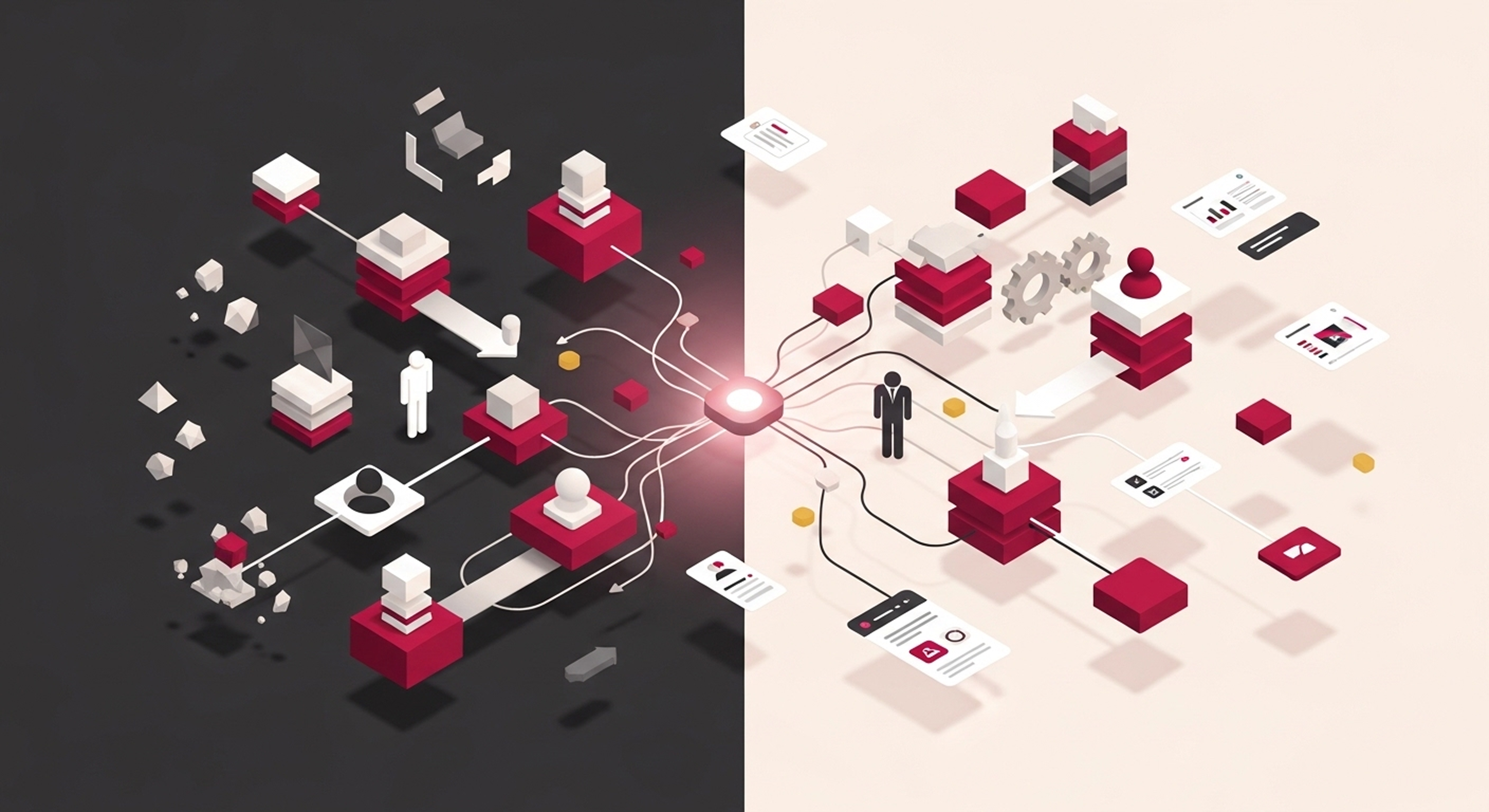
Every entrepreneur out there wants a booming business. After all, what’s the purpose of a business if it is not to grow and make profit? It is relatively easier to manage a small business, but without a solid plan, you hit a wall once the business starts growing. Suddenly, you find yourself hiring faster and shipping more campaigns. This is a new reality that your erstwhile system may not be able to keep up with. Every new customer needs onboarding. Every employee needs equipment and access. Every campaign needs tracking. Every stakeholder needs reports. How do you keep up with these new demands?
Workflow automation fixes this issue. The global workflow automation market hit $21.67 billion in 2024 and is projected to reach $45.49 billion by 2032. Companies are moving fast because nearly 60 percent of organizations see a return on investment within 12 months of adopting automation. Here are the 5 workflows you need to automate right now, backed by data from companies that already did it.
1. Customer Onboarding Workflows
You may have an app that solves a unique problem and still experience clients ghosting you after signing up. This usually arises due to a messy onboarding process. Studies show 63% of purchase decisions hinge on how well you execute the first 90 days. You cannot afford to automate this poorly, or else you face the risk of customer churn.
What to Automate
- Replace manual check-ins with automated workflows that guide customers through key phases. This ensures momentum is maintained by the system, not human supervision.
- Utilize document collection with e-signatures. This ensures that documents get signed quickly without back-and-forth emails.
- Track progress using notifications that trigger when a user completes a step, not just calendar reminders that go off on specific dates.
- Personalize onboarding journeys based on user role or plan type. For example, enterprise customers get hands-on support while small businesses get a faster, DIY path. Same onboarding system but with different experiences based on who's paying what.
2. Employee Onboarding & HR Workflows
Your people team should not be manually creating accounts or sending reminder emails in 2026. Although this might still work, it would stall operations as the company grows. 36% of HR professionals say their onboarding processes are hindered by a lack of automation. A fast growing firm realized that it takes roughly ten hours of work across three departments to onboard one employee, and needs more than six emails per hire. The same data entered into six different tools over and over again.
On the other hand, 69% of employees are more likely to stay three years after a strong onboarding process. This shows that the difference between employee turnover and retention is largely dependent on automation.
What to Automate
- Automate preboarding workflows so the system can trigger and send necessary documents and training plans before their first day at work.
- Automate account setup so that a single trigger activates email, Slack, GitHub, and benefits portals simultaneously.
- Deploy role-based onboarding checklists that automatically customize tasks based on a new hire's department and seniority level, instead of one generic checklist for everyone
- Use role-based onboarding checklists that adjust by department and seniority, rather than a single generic checklist for everyone.
3. Sales Pipeline & CRM Automation
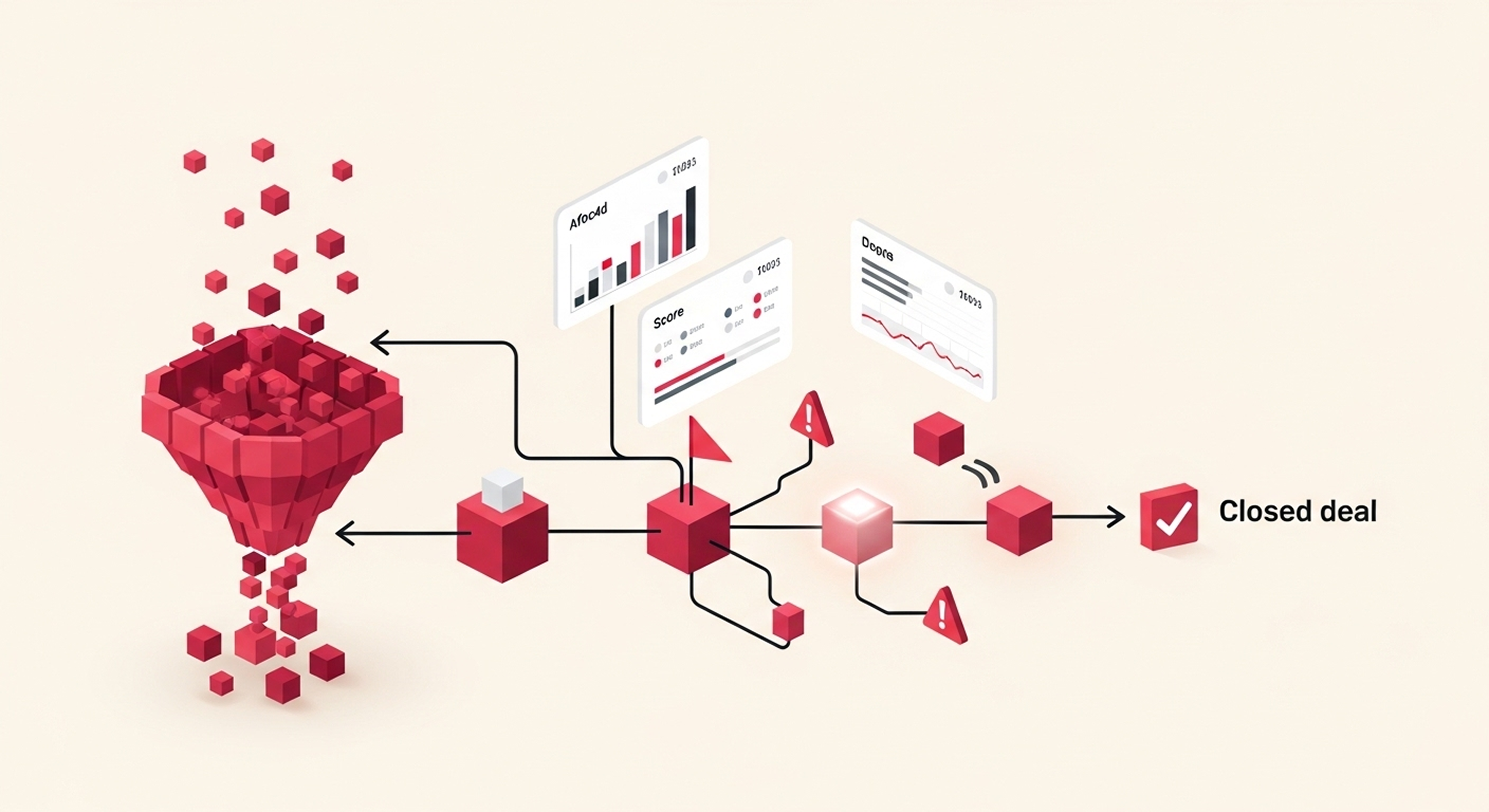
Sales reps often find themselves spending more time navigating Salesforce than engaging with customers. This is usually the tale of sales reps working in companies that run manually. Without automation, deals stall due to late follow-ups. Even leads go to whoever gets it first, not who's actually best for the account. When you automate the workflow between your sales tools and CRM, everything runs smoothly. There are fewer handoffs between GTM teams and fewer incidents of double entry. Workflow automation increases lead volume by 80%, conversions by 75%, and qualified leads by a whooping 451%.
What to Automate
- Automate manual lead sourcing through automated lead routing with round-robin functionality. This helps to automatically gather leads from custom landing pages and forms.
- Score leads intelligently based on engagements such as page views, email opens, demo requests, and content downloads.
- Let the CRM handle the updating of deal stages automatically. Once a demo is done or a contract is sent, the stage moves.
- Set up pipeline alerts for stagnant deals so you can follow up on them urgently.
4. Marketing Campaign Orchestration
Your marketing team does not have to juggle email schedules, check A/B test results, and update campaigns across multiple platforms. Being busy does not translate to being effective. McKinsey research shows that up to 22% of a brand marketer’s daily work can be automated within 5 years. Campaign monitoring and performance analysis alone can amount to productivity gains of around 40%. Marketing automation has evolved; we have moved from scheduled workflows to autonomous systems that optimize campaigns across different channels.
What to Automate
- Create welcome sequences that are tailored to how new subscribers engage. Automate lead nurturing by buyer persona, with content that changes based on user behaviour.
- Connect your email, social, and SMS so your messaging stays consistent. The system handles the coordination, so you save yourself the stress of manually updating different platforms.
- Automate A/B testing from start to finish. Let the system identify winners and roll them out automatically.
- Enable real time campaign adjustments so when open rates drop, new subject lines are tested instantly without any need for human input.
5. Data & Reporting Workflows
A data analyst reviews data to identify key insights into a business' clients and ways the data can be used to solve problems. Yet, 80% of their time goes into preparing data instead of delivering actual insight. Reports that should take minutes go on for days because the data is embedded in different tools. For a data analyst to provide updated numbers to a stakeholder, they go through the laborious process of combining, reformatting, exporting etc.
Automated reporting helps data reach the right people at the right time compared to traditional reporting workflow that takes days or even weeks. AI driven reporting compresses this timeline further and even allows real time and automated analysis, so teams can respond while campaigns are still running.
What to Automate
- Set up automated data integration pipelines that pull info from all your different tools automatically.
- Build dashboards where KPIs update the moment a sale is made or a lead is captured. This gives you a real-time view of the business.
- Use AI-powered insights and anomaly detection to flag unusual spikes or drops before they escalate.
- Run automated quality checks to spot errors, duplicates, or weird data gaps before they ever make it to an executive’s desk.
Start Now
You don’t need to have the biggest budget or the most employees to experience business transformation. It is as easy as automating the right workflows first. You don’t necessarily have to automate everything at once. Pick one workflow from this list that is your biggest pain point and automate it this quarter. Track the results, measure their impact, and then move to the next. While your competitors are trying to hire their way out of a mess, you’ll be scaling without needing extra manpower.
TAGS:

Build what matters, with Gozade
Let's Talk
Gozade
Address 1
3rd Floor, 86-90 Paul Street, London, England, United Kingdom, EC2A 4NE
Address 2
SUITE E141, IKOTA SHOPPING COMPLEX, VGC AJAH LAGOS, NIGERIA
+2349032770671, +44 7873272932
Gozade builds smart digital solutions that help businesses grow and scale with confidence.
© 2026 Gozade. All rights reserved.