
Insights
Articles
13 April 2026
7 min read
African Tech Startups Are Building World-Class Products. Why Are So Few of Them Built for African Users?
Praise Ohans
Author

African tech startups are having a moment. The momentum is concentrated in a few cities like Lagos, Nairobi, Cairo, and Cape Town. They carry the weight of the continent’s innovation narrative, recording monumental funding rounds and billion-dollar valuations. You also see headlines that frame the continent as the next global frontier for innovation. On the surface, the African tech ecosystem growth curve appears undeniable, but this narrative doesn’t translate to everyday life.
The average African user is not thinking about venture capital inflows or unicorn status. They are worried about data costs, unstable internet, language barriers, and whether an app actually solves a real problem. For all the progress African tech products are making, they barely solve “the African problem”, which leads to the inevitable question about who these products are actually built for. In a real sense, African remote talents are shipping products to the global market but are locally irrelevant.
The “By Africa, For Africa” Narrative
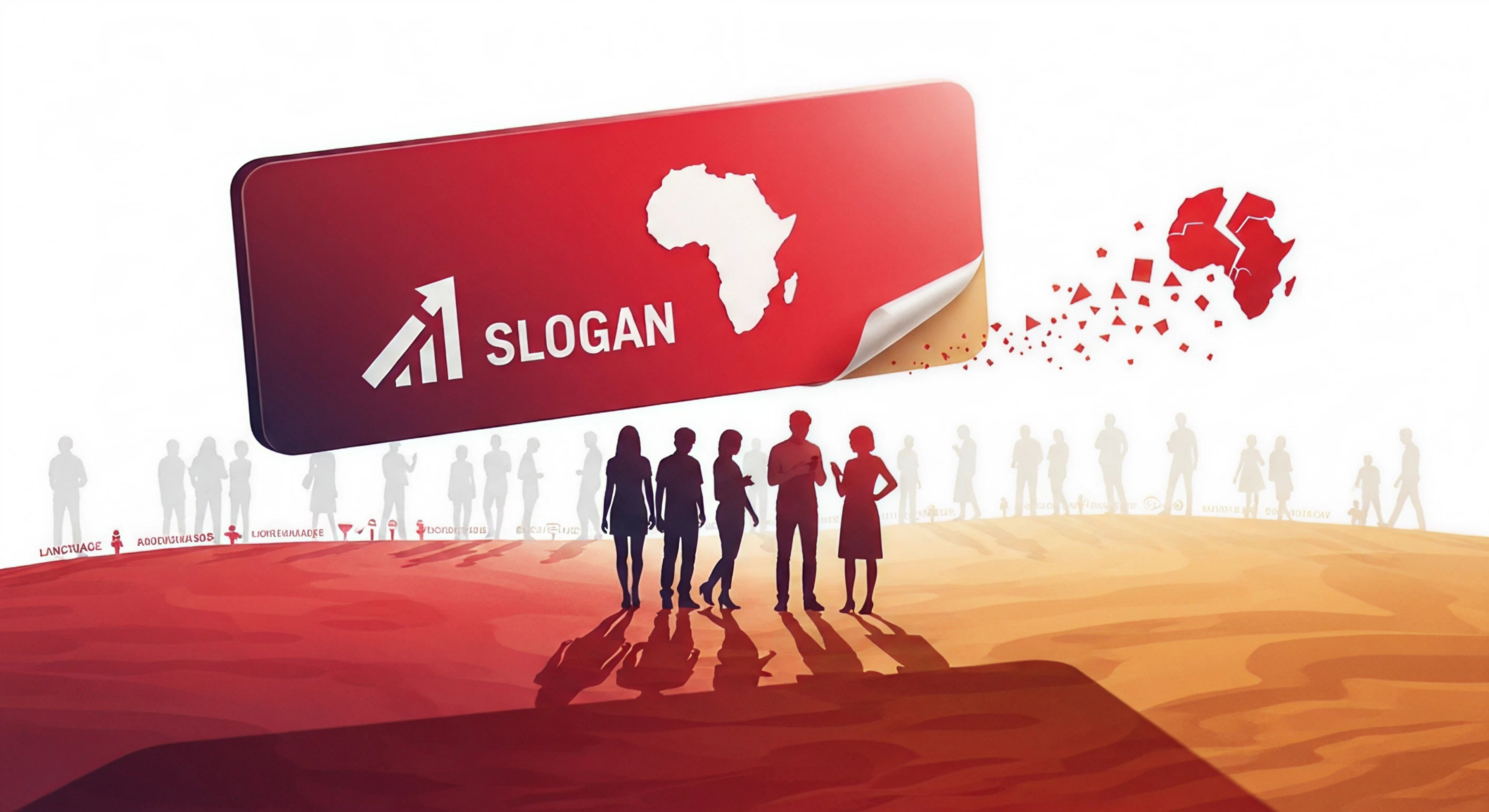
“Built in Africa, for Africans” has become some sort of default slogan. You hear it in pitch decks, founder interviews, and brand messaging. There is just something about it that sounds right, and most especially, it sells well. This narrative is the very strength of African startups: deep customization to local markets. However, when you hold this slogan against actual product behaviour, it falls short because, in the end, what the startups say does not matter; all that matters is who they are building for.
When you look closely at most high-growth startup products, you will notice that the assumed user is young, urban, English-speaking, smartphone-native, and comfortable navigating apps, digital payments, and online services. In other words, a very specific part of the population. According to TechCabal, nearly every product is built with Gen Z and millennials in mind, and the default African user is assumed to be under 35 and tech-savvy. That excludes a massive portion of the continent.
Startups are not failing to build good products. They are building products for a limited audience and calling it a continental impact. Until inclusive design in African tech becomes a norm, “for Africa” will remain more about branding than reality.
Why African Startups Aren’t Built for Most Africans
1. Foreign Venture Capital Shapes Product Direction
Money not only funds startups, but it also defines them. Roughly 80% of African startups' funding comes from abroad; much of it from Europe and North America, a higher share than in any other emerging market. Foreign investors bring assumptions about what a successful product looks like, what metrics to chase, and which user behaviors matter. Now, the definition of success starts to follow that script. As INSEAD Knowledge notes, investors may have a limited understanding of the unique challenges and dynamics of the African market, which can hinder effective decision-making and resource allocation.
It is not that founders are ignoring local users on purpose. It is that they are building within a system where the product direction comes from the people funding the company. Those signals are often not rooted in local realities.
2. Products Are Priced and Designed Beyond Most Africans' Reach

African founders are often praised for building around constraints. Yet, many products ignore the constraints most Africans face daily. Smartphones cost up to 95% of monthly income for the poorest 20% of the population, and mobile internet penetration in sub-Saharan Africa sat at just 27% as of 2023.
On top of that, digital devices and software are roughly one-third more expensive in Africa than in the United States, even before accounting for the massive difference in purchasing power. To put this in context, an app that requires a recent smartphone for operation, or has its services break down completely when the network drops, isn’t building for Africa, only a small part of it.
This is where the challenges of tech adoption in Africa become profound. This is because when products ignore these realities, they are not solving infrastructure problems; they are only working around them by targeting the minority who can afford to bypass them.
3. Language and Culture Are Still a Problem
Africa has over 2,000 spoken languages. It is a network of different languages, cultures, and contexts. Yet, most of its tech products default to English or French, not because they reflect how people communicate daily, but because they are easier to standardize and scale. AI tools and digital products are built without non-Western languages or contexts in mind, which means the majority of Africans interact with software that was never really designed to understand them.
Many AI-driven products rely on datasets that barely represent African languages or cultural contexts. Design decisions often reflect Western usage patterns. This directly affects how accurately products understand and respond to African users. It’s rather ironic that AI-powered African products often run on data that doesn't reflect the continent’s realities.
4. Brain Drain Removes the Builders Most Likely to Solve Local Problems
If there is one thing that has always been clear, it is that Africa is not bereft of talent. What is less discussed is where that talent ends up. A significant portion of the continent’s best talent is being absorbed into global systems. Africa's brightest tech talent is regularly recruited by global giants like Google, Amazon, and Microsoft, leaving local startups to build with leaner, less experienced teams.
The reasons are not complicated. For many African talents, leaving or working remotely for foreign companies means they get better pay, better infrastructure, and a more structured career path. The effect is seen in product development as exposure shapes perspective. When builders spend most of their time working within Western systems, they internalize Western problems, workflows, and definitions of what matters. Over time, this influences the kinds of products they imagine and the users they picture.
The Double Standard in "World-Class"
The definition of “World class” can be very subjective. In the context of African tech, a product is considered world-class if it attracts global funding or gains international media coverage. It usually has little or nothing to do with whether it serves most Africans well. When you break it down, the standard for what constitutes a world-class product is often set externally. Validation comes from investors and publications that operate outside the environments these products are meant to serve.
The startups that actually break this mold, like M-Pesa, Paystack, and Wave, did so by refusing to build for a hypothetical global user. They built for the specific financial realities of ordinary Africans, such as informal income, low-trust banking environments, USSD as a feature, etc. Their success stemmed from that specificity.
Bridging the Gap

The correction has started, albeit slowly. African investors now represent 31% of active venture capital participants, up from 19% a decade ago. Local investors understand local contexts much better. They understand that data costs money, that power outages are a UX problem, and that community trust is a huge distribution channel. At the product level, voice interfaces and multilingual design in African languages are a mainstream product strategy for a continent of 1.4 billion people. Designing for the majority means accepting the constraints of the African market. Low bandwidth, shared devices, and language diversity are normal. When products are built with these realities in mind, they appeal to the majority of the targeted audience.
Conclusion
African tech is not lacking in quality. The engineers are brilliant, and so are the founders. The problems being solved are real. The only challenge is about who counts as the user.
A product is only world-class if the solution it offers reflects the people using it. African startups, and the investors funding them, must factor in the rural, the low bandwidth, the multilingual, and the economically excluded. If not, "built in Africa" and "built for Africa" will remain two very different things. The continent needs more founders who identify a grandmother in Ibadan or a market trader in Accra and say: This person is my primary user. This mindset is what separates a world-class African product from a world-class product that just happens to be made in Africa.
TAGS:


Build what matters, with Gozade
Let's Talk

Gozade
Address 1
3rd Floor, 86-90 Paul Street, London, England, United Kingdom, EC2A 4NE
Address 2
SUITE E141, IKOTA SHOPPING COMPLEX, VGC AJAH LAGOS, NIGERIA
+2349032770671, +44 7873272932
Gozade builds smart digital solutions that help businesses grow and scale with confidence.
© 2026 Gozade. All rights reserved.