
Insights
Articles
19 May 2026
4 min read
Hiring Your First Developer: Common Mistakes Startups Make
Praise Ohans
Author

Why Your First Developer Hire Can Make or Break the Startup
Hiring your first developer is an integral business aspect that can either make or mar a startup. Most founders do not put so much thought into the hiring process. I mean, all they need is someone who can code, is technical, and can finally turn the idea sitting in their Notion board into a real product people can use. They head over to LinkedIn, Upwork, or Twitter looking for the smartest engineer they can afford.
Three months later, the MVP still feels unfinished, with a messy codebase. This is one of the most common startup hiring mistakes founders make. Usually, because early-stage hiring feels deceptively simple.
It is easy to think that hiring software developers for startups is mostly about technical skill. It actually isn't. Your first developer influences product direction, execution speed, architecture quality, hiring standards, communication culture, and sometimes whether the company survives long enough to raise another round. In this article, we’ll cover mistakes most startups make, so you don’t have to suffer the same fate.
Hiring Before You Know What You're Building

One of the biggest mistakes founders make when hiring their first developer is starting recruitment before they fully understand what they are actually building. The idea may sound clear in their head, but they can’t explain the concept explicitly in conversations. When developers begin asking practical questions about workflows, priorities, user journeys, or feature requirements, the answers become vague. For instance, a founder says they want “an app like Uber for fitness” or “something similar to Airbnb but for creators.” That sounds descriptive, but it explains almost nothing operationally.
Write a simple product brief: one to two pages highlighting core features; what the product won't do, and what "done" looks like for version one. You don't need to be technical to do this.
Rushing the Hire Because You Feel Behind
Startups operate under constant pressure, which changes how founders make decisions. It is quite understandable because competitors are launching faster, and investors want traction. This makes founders feel pressured to fill a role quickly; they overlook crucial steps in vetting, and those hires can damage team dynamics and morale long after the person is gone. According to Harvard Business School, a bad hire can cost up to five times an employee's annual salary when you factor in lost productivity, recruitment costs, and opportunity costs.
Filtering Only on Technical Skills
One way non-technical founders get misled during hiring is by assuming portfolios automatically reflect ability. Research from Leadership IQ shows 89% of hiring failures come from poor cultural fit, not lack of technical ability. In one documented case, a technical developer who clashed with a company's collaborative work style caused two team members to request transfers, dropped sprint velocity by 40%, and cost the company over $200,000 in lost productivity and replacement costs.
If a developer can't communicate blockers or collaborate effectively, your delivery speed suffers regardless of how skilled they are technically.
Going Cheap on the Most Important Hire
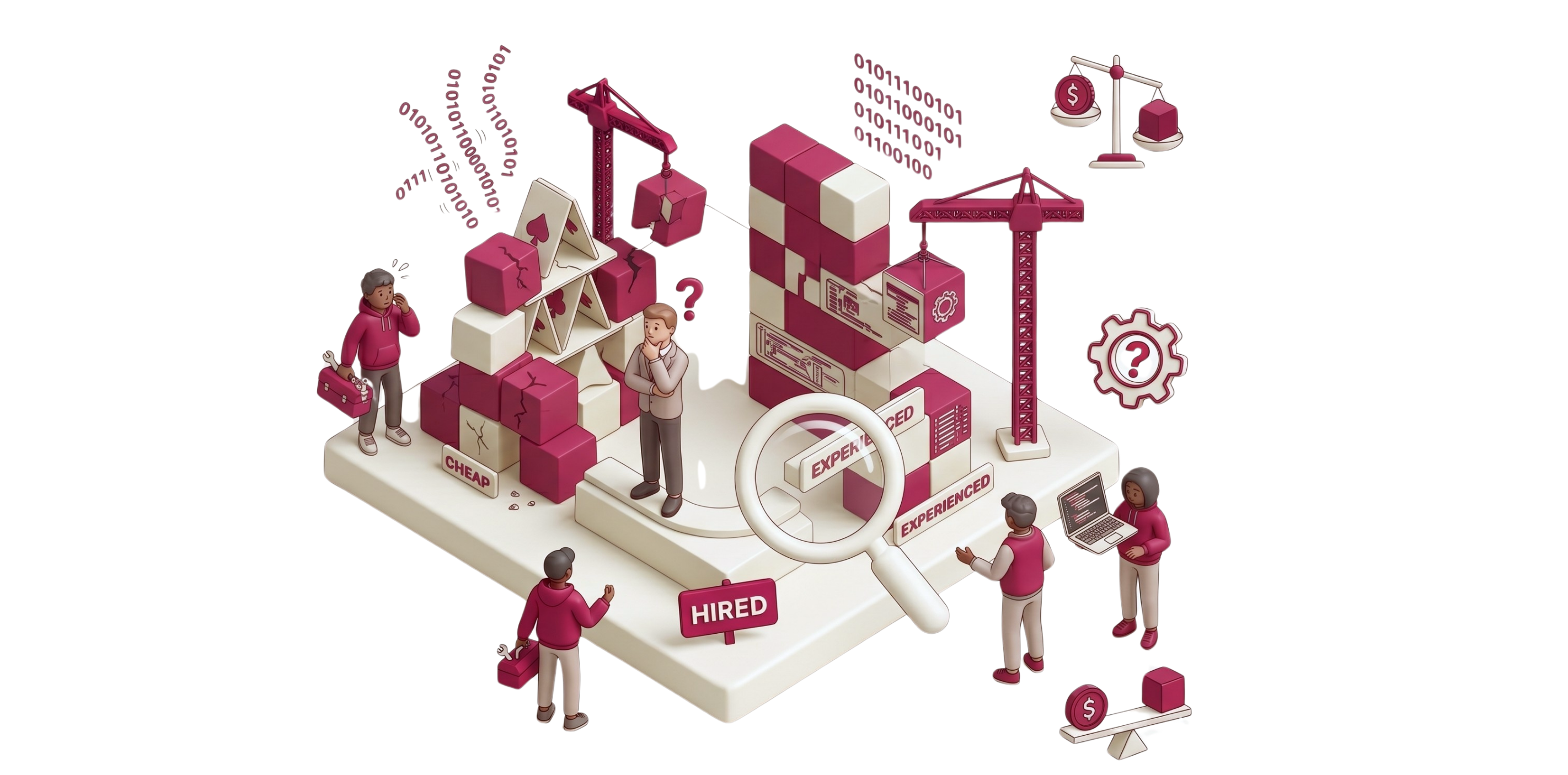
The instinct to save money on your first developer is understandable. However, it is also one of the more expensive decisions you can make.
Cheap hires often come with one baggage or the other: bad architecture, endless rewrites, security lapses, etc. You may think you saved money upfront, but you end up paying twice: once for the developer, and again for someone to fix the mess.
Your first developer is not the place to cut costs. Hire someone who knows how to build products in a startup context, even if it costs slightly more. You need someone who has shipped real products before and knows what it takes to launch a successful one.
Taking the Portfolio and References at Face Value
Candidates claim proficiency in technologies they've barely touched, exaggerate their role in projects, and sometimes showcase work they didn't even create. This is why resumes and portfolios must be heavily scrutinized. A good developer should be able to show their portfolio, share case studies, and connect you with past clients. If they hesitate on any of that, that’s a bad sign.
When you call references, ask two specific things: Did they deliver on time? And how did they communicate when something went wrong? Founders often focus too narrowly on coding ability, forgetting that poor communication can also slow execution.
Conclusion
Your first developer hire is a strategic one. The person you bring on early determines how your product is built, how your team communicates, and how fast you move when it matters. Getting it wrong slows you down as much as it drains resources and morale at a stage when you can least afford it.
The good news is that most of these mistakes are avoidable. Know what you are building before you start recruiting. Take the time to vet properly, even when you feel behind. Look beyond the résumé and ask the questions that reveal how someone works. Also, understand that the cheapest hire rarely stays cheap.
You must approach your first developer hire with the same seriousness you give to your product or fundraising strategy. This is what gives your company a real foundation: one that can support everything you are trying to build.
TAGS:

Build what matters, with Gozade
Let's Talk

Gozade
Address 1
3rd Floor, 86-90 Paul Street, London, England, United Kingdom, EC2A 4NE
Address 2
SUITE E141, IKOTA SHOPPING COMPLEX, VGC AJAH LAGOS, NIGERIA
+2349032770671, +44 7873272932
Gozade builds smart digital solutions that help businesses grow and scale with confidence.
© 2026 Gozade. All rights reserved.