
Insights
Articles
6 May 2026
6 min read
User Research in Product Design: Why Most Teams Skip It and What It Costs Them
Praise Ohans
Author
The Most Expensive Shortcut in Product Design
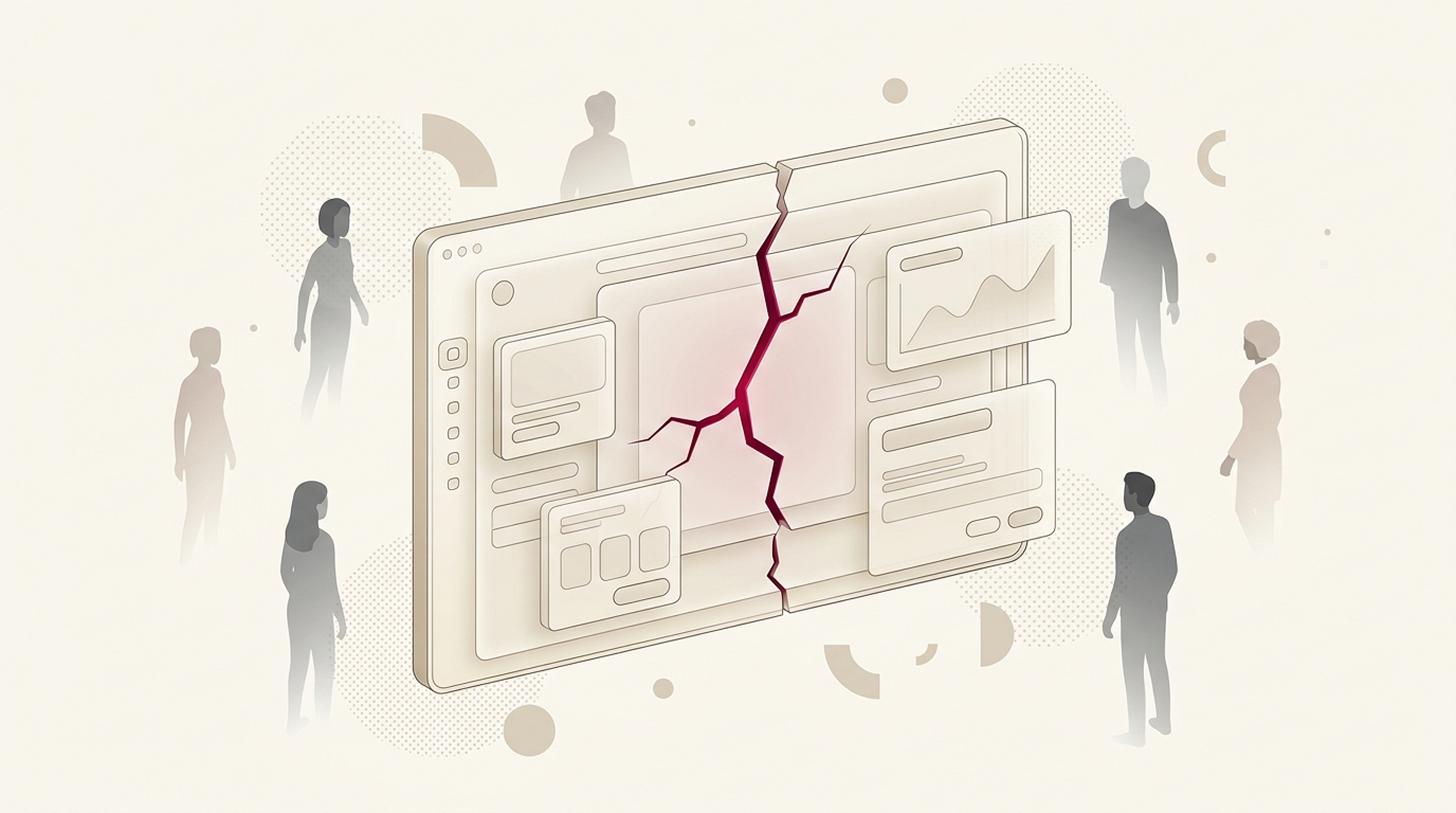
Every single product in the market is built to be used by users. I mean, that’s quite obvious. No product is shipped to be used by zombies. If this is the case, why then are so many products shipped without their users in mind? Building a product without talking to users is the most expensive shortcut in tech. Yet most teams take it anyway.
Around 95% of new product releases fail, and a significant amount of those failures is due to teams building what they assumed users wanted instead of what users actually need. Even worse, about 42% of startup failures are due to no market need. This is not a technology problem like many would have guessed; this is a validation problem. Startups realize the importance of User research. Why then does it keep getting cut, and what does skipping it cost?
What User Research Means
User research is the practice of understanding your users: their behaviors, goals, and pain points, before, during, and after building a product. It goes beyond just asking users what they want. It's understanding people's needs, motivations, and problems, then helping the product team figure out how to build something that satisfies them.
Despite this clear value, user research is often the first step that gets cut when time or money gets tight. It is interesting to find that in many companies, teams are praised for completing projects on time and on budget, regardless of whether the final result is usable or not. If what is most useful to your organization is completion rather than usability, then you are building without your users in mind. This is often a recipe for failure.
Why Most Product Teams Skip User Research

User research doesn’t usually get skipped because it is seen as unnecessary. It gets skipped because it is invisible. Most teams place too much emphasis on meeting deadlines, shipping features, and completing roadmaps. They rarely factor in whether the product actually works for users.
Organizations often prioritize output over outcome. The goal is all about shipping a product at the earliest possible time. So, when timelines get tight, something must go, and research is the easiest thing to cut because it doesn’t produce immediate, visible output. From a management perspective, it sure looks like a delay. Here is what reasons look like in most workplaces:
1. "We don't have time." This is one lie most teams feed themselves. It comes mostly from people who somehow did have the time to build the wrong thing first, then hired expensive consultants to fix it. The engineers waiting on designs almost always have months of technical debt they could be working through instead. The reality is that the teams that skip user research on the basis of a lack of time end up paying for it later in rework, redesign, and usability fixes. So technically, they are not saving time; they are just stretching it.
2. "We already know our users." This excuse seems more subtle because Quantitative data is abundant, accessible, and comfortable. However, it is one of the most dangerous excuses to ever permit, because data, although readily available, does not paint a full picture. Data shows behaviour, it doesn’t explain it. Dashboards and heatmaps show you that users didn’t use a particular product, it does not explain why users abandoned the flow or distrust a feature.
3. "Research is too expensive." Good UX research doesn't have to cost anything; it just needs to be intentional. There are documented cases, like one highlighted by Ideoz, where a designer recruited 12 participants via LinkedIn, ran calls on Google Meet, transcribed with Otter.ai, and identified a critical problem that saved a client $45K in avoided development waste. Total cost was $0.
4. Fear: Yes, you read right. Fear. This is one common reason why a lot of teams opt out of research. Research creates the risk of learning something that disrupts a settled plan. For teams under pressure to ship, for founders emotionally invested in their initial vision, the prospect of learning something unwelcoming can be very heart-wrenching.
The Cost of Skipping User Research
Errors discovered post-release cost 100x more to fix than errors caught during design. You would assume that this ratio ends all uncertainty regarding user research, but it doesn’t. This is because the cost of skipping user research doesn’t usually appear as a clear, obvious expense. For instance, no budget line says “Cost of things we didn’t research properly”. The cost of skipping user research appears in unused features, unexplained churn, rework cycles, and failed launches.
Almost half of all workers (47%) have watched projects fail because the team simply wasn’t aligned. This kind of misalignment usually happens when important decisions are made without any evidence about what users actually need.
The numbers get even worse with Agile. Teams that rush into development and skip the discovery/research phase see their projects fail 65% of the time. But when teams invest in proper upfront discovery and user research, the failure rate drops all the way down to just 10%. The improvement in outcome is genuinely bonkers! Companies have paid prices for ignoring this crucial phase:
Snapchat rolled out a major redesign in 2018 without properly validating it with users. This resulted in users hating the confusing new layout, millions signed petitions to revert it, the company lost millions of daily active users, and its market value dropped by $1.3 billion in a single quarter. They eventually had to walk back parts of the redesign.
Juicero raised $120 million from top investors to build a high-tech, WiFi-connected $400 juice machine. Basic user research would have revealed that people could get the same result by simply squeezing the juice packets by hand. This led to a shutdown after 18 months and massive investor losses.
What User Research Delivers

According to Forrester Research, every dollar invested in UX yields a $100 return, that is a massive 9,900% ROI. It sounds almost too good to be true, but the real-world impact behind these numbers is even more mind-boggling.
Good UX isn’t just about making things look pretty. It directly impacts revenue and customer loyalty. A well-executed UX design can raise conversion rates by up to 400%. 88% of online consumers are less likely to return to a site after a poor user experience. Here are concrete examples.
Booking.com discovered through user research that people were getting confused by their calendar/date-picker. They made one simple improvement to the flow, and conversions jumped by 4%, worth millions in extra bookings.
Slack ran diary studies and prototype tests to smooth out their onboarding process. This resulted in users reaching a value 35% faster, with their NPS score rising by 9 points.
Companies that do regular user research are 2.6x more likely to exceed their product goals, and 1.9x more likely to improve customer retention. Additionally, increasing customer retention by just 5% through better UX can lead to a 25% increase in profits.
The Case For User Research
Skipping user research doesn't save time. It borrows it, and at a very high interest rate.
The later you make changes, the more expensive they become. It's much cheaper to change an idea than an almost-completed app. If the core idea is misguided, learning that just before launch can be very devastating.
The teams building products people actually use aren't the ones with the biggest budgets or the fastest sprints. They only realize that the risk of not knowing their users is greater than the discomfort of finding out.
TAGS:

Build what matters, with Gozade
Let's Talk

Gozade
Address 1
3rd Floor, 86-90 Paul Street, London, England, United Kingdom, EC2A 4NE
Address 2
SUITE E141, IKOTA SHOPPING COMPLEX, VGC AJAH LAGOS, NIGERIA
+2349032770671, +44 7873272932
Gozade builds smart digital solutions that help businesses grow and scale with confidence.
© 2026 Gozade. All rights reserved.