
Insights
Articles
6 July 2026
10 min read
AI Search Is Changing How Buyers Find Tech Partners: What African Businesses Should Know
Praise Ohans
Author

A few years ago, finding a technology partner usually began with a simple Google search. A business owner would type something like "best software development company in Nigeria" or "ERP implementation partner in Africa," open several websites, compare services, and eventually reach out to a few companies. However, that buying journey has changed. Today, many decision-makers skip the traditional search results altogether. Instead, they ask AI tools such as ChatGPT Search, Gemini, Google AI Mode, Microsoft Copilot, or Perplexity. The answer they receive may not be a long list of websites. It may be a summary with a few recommended companies. That means AI search is no longer just helping buyers find information. It is also helping them decide who deserves attention.
This is crucial because many buyers now build their shortlist before they ever speak to a vendor. By the time they visit your website, send a message, or book a call, they may already have been influenced by what an AI system said about your business. If your company does not appear in that answer, you may lose the opportunity before you even know it existed.
This article explains what AI search is, how it is changing the way buyers find tech partners, and what African businesses should know if they want to stay visible in the new AI-powered buying journey.
What Is AI Search, and Why Should It Change How You Market Your Business?
AI search is a new way of finding information online. Instead of typing a query into Google and choosing from a page of links, a buyer asks a question and receives a direct answer written by an AI system. In traditional search, the buyer does most of the work. They search, click, compare, read, and decide which company looks credible. In AI search, the tool does more of that work for them. It reads information from different sources, summarizes what it finds, and may recommend specific businesses, products, or service providers. A 2026 survey of CMOs found that 84% now use tools like ChatGPT, Claude, and Perplexity for vendor discovery, up from just 24% a year earlier, and more than two-thirds start there before they even open Google.
This is already happening through tools like Google AI Overviews, Google AI Mode, ChatGPT Search, Gemini, Microsoft Copilot, and Perplexity. These platforms do not simply display websites. They interpret the buyer’s question and try to provide a useful response immediately.
This, in turn, has changed the role of marketing. Before now, many businesses focused mainly on ranking on Google. The goal was to appear on page one, get clicks, and convert visitors. That is still important, but AI search adds another dimension. Now, your content also needs to be clear enough, credible enough, and consistent enough for AI systems to understand and recommend.
This is why AI search optimization matters. It is not just about stuffing pages with keywords. It is about making your business easy to identify, easy to trust, and easy to explain. If an AI system cannot clearly understand what your company does, who you serve, what problems you solve, and what proof you have, it is less likely to mention you when a buyer asks for recommendations.
That is why businesses should care. AI search is becoming a new discovery channel. For tech companies, consultants, and SaaS providers, it could influence who gets found, compared, and contacted.
How Are Buyers Choosing Tech Partners Today?
Gone are the days when buyers wait for sales teams to educate them from scratch. Now, many of them are doing deep research with the help of AI. They ask AI tools to compare vendors, check for the credibility of companies, and even go as far as asking AI to explain the risks of choosing one provider over another. In other words, AI has entered the B2B buyer journey. The AI response can shape the buyer’s thinking before your sales team ever gets involved. It can introduce companies that the buyer has never heard of. It can also exclude companies that fail to show enough public proof of their work.
51% of B2B software buyers say they now start their research in an AI chatbot rather than a search engine, and a third of them ended up buying from a vendor they'd never heard of before the AI mentioned it. If AI cannot find strong evidence about your business, you are unlikely to make the shortlist. Vague service pages, empty claims, outdated websites, and inconsistent company descriptions make it harder for AI systems to understand why you should be recommended.
Buyers still verify what AI tells them. There is around a 90% click-through to sources to confirm the information they receive. So, your website still matters, blog posts, and external mentions still matter. The difference is that a human may no longer be the first reader. AI may read your business before the buyer does. That means your online presence must now serve two audiences at once: the human decision-maker and the AI system helping that person decide.
When a buyer asks AI who to trust, will your business be part of the answer? This is a very important question to ponder on.
What Does This Mean for African Businesses Looking for a Tech Partner?
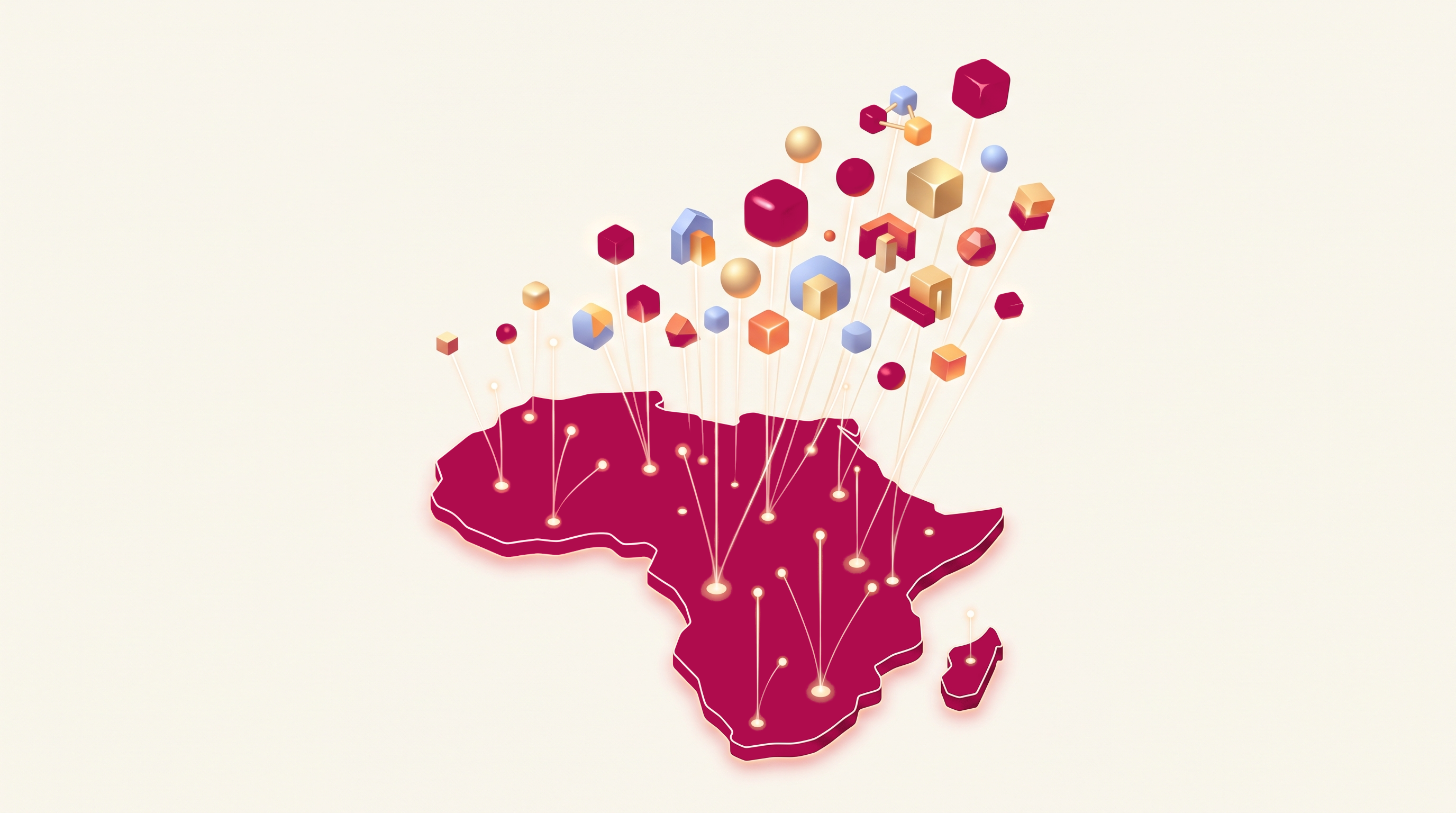
The rise of AI search is changing how businesses around the world find technology partners, but it presents a particularly important opportunity for African businesses. Across the continent, small and medium-sized enterprises (SMEs) make up nearly 95% of registered businesses and contribute significantly to employment and economic growth. As more of these businesses invest in digital transformation, the demand for reliable software development companies, and digital solution partners continues to grow.
However, many businesses are still in the early stages of their digital journey. Research shows that fewer than one-third of SMEs that have adopted digital tools use them extensively to run their operations. Instead, many continue to rely on manual processes for customer management, inventory tracking, finance, and internal communication. The reasons are well-known across many African markets. Studies involving SMEs in Nigeria, Ghana, and Senegal found that poor internet connectivity remains a challenge for many businesses. Beyond infrastructure, there is also a knowledge problem. Around 72% of businesses reported lacking the AI-related skills needed to adopt emerging technologies effectively, while 41.7% said they were simply unsure how artificial intelligence could improve their operations.
As more African businesses explore AI-powered tools, they rely on AI assistants to help them understand unfamiliar technologies and to recommend service providers. Instead of spending hours researching software companies individually, business owners can ask an AI assistant for recommendations that fit their budget or industry.
As AI adoption grows across Africa, it is becoming natural for these same users to ask AI which company they should hire. Unlike more mature markets where thousands of businesses have already built years of authoritative online content, many African software companies have relatively little digital footprint beyond a basic website or LinkedIn page. That means the competition for visibility in AI search is still relatively low.
Businesses that begin documenting their expertise today can establish authority before the space becomes crowded. Publishing detailed case studies, answering customer questions through educational content, showcasing successful projects, and consistently explaining what your company does all increase the likelihood that AI systems will understand, and recommend your business.
For African businesses looking to attract more clients, AI search has become the first place potential customers begin looking for trusted technology partners.
How Do You Show Up When Someone Asks AI Who to Hire?
Appearing in AI search results isn't about finding a loophole or discovering a secret ranking trick. AI systems are designed to recommend businesses they can understand and trust. If you want your business to appear when someone asks AI to recommend a software development company, focus on publishing information that demonstrates real expertise rather than making broad marketing claims.
1. Publish Real Case Studies That Prove Results
One of the strongest trust signals you can provide is a detailed case study. Instead of saying your software "improves efficiency," explain exactly what changed. For example, a statement such as: "Reduced invoice processing time from three days to four hours within six weeks." is far more valuable than: "Helped improve operational efficiency."
Include before-and-after comparisons, timelines, implementation details, measurable outcomes, and customer testimonials wherever possible. These details strengthen both your credibility with buyers and your visibility in AI search.
2. Put Named Persons Behind Your Content

AI systems look for evidence that knowledgeable professionals stand behind published content. Whenever possible, add author pages for founders. Include professional LinkedIn profiles. Publish expert commentary and industry insights. Use bylines instead of posting everything under the company name. Include direct quotes from the people responsible for delivering projects.
These practices reinforce important trust signals associated with Experience, Expertise, Authoritativeness, and Trustworthiness (E-E-A-T), making your content easier for AI systems to evaluate confidently.
3. Keep Your Information Consistent Everywhere
AI models rarely rely on a single source. Instead, they compare information across multiple trusted platforms before deciding whether it is reliable. That means your company description should tell the same detail wherever your business appears. Review your Website, LinkedIn Company Page, Google Business Profile, Startup listings, etc.
Ensure your services, industries served, company description, contact information, and core messaging remain consistent. Consistency also strengthens your local SEO and makes it easier for buyers to recognize your brand wherever they encounter it.
4. Earn Mentions Beyond Your Own Website
Your website should not be the only place discussing your expertise. Over 85% of the external sources cited by AI systems come from earned media rather than paid advertising.
That includes podcast appearances, guest articles, award recognition, mentions in reputable publications, etc. These external references act as independent validation of your expertise. When respected organizations mention your business, AI systems gain additional confidence that your company is credible enough to recommend.
What AI Search Rewards That Traditional SEO Doesn't

Search engine optimization is not going away, but the metrics for visibility are changing. For years, traditional SEO focused on helping websites rank higher in search engine results. Businesses invested in keyword research, backlinks, and technical optimization to attract more clicks from Google. Those practices still matter, but AI search introduces a different goal.
AI search, on the other hand, places greater value on trust and evidence. Rather than simply identifying pages that match a keyword, AI systems evaluate whether a company has consistently demonstrated expertise across multiple credible sources. This is where concepts such as Generative Engine Optimization (GEO) and Answer Engine Optimization (AEO) become increasingly important. Rather than optimizing only for search engines, businesses are now optimizing to become reliable answers that AI systems can confidently surface in conversations.
For example, a website that repeats the phrase "best software development company" dozens of times may perform reasonably well for traditional search queries. But if it lacks customer success stories, expert authors, consistent company information, and independent mentions across the web, AI systems have little evidence to justify recommending it.
On the other hand, a company that publishes detailed case studies, attributes articles to experienced professionals, earns mentions in respected industry publications, and maintains accurate information across its website, LinkedIn page, and business directories sends much stronger trust signals. Those are the kinds of signals AI systems increasingly rely on when recommending technology partners.
This doesn't mean keywords, backlinks, or technical SEO no longer matter. They remain an important part of building online visibility. The difference is that they are no longer enough on their own.
AI Is Becoming the First Meeting Your Business Has With Buyers
Before AI became part of the buying journey, businesses competed mainly for search rankings. Today, they also compete to become the answer AI confidently recommends. As more buyers use AI tools to research and compare technology partners, companies that publish credible case studies, showcase expert knowledge, and maintain consistent information across the web are more likely to earn trust and visibility. Building that authority now gives your business a stronger advantage as AI search continues to shape how customers discover and choose technology partners.
TAGS:

Build what matters, with Gozade
Let's Talk

Gozade
Address 1
3rd Floor, 86-90 Paul Street, London, England, United Kingdom, EC2A 4NE
Address 2
SUITE E141, IKOTA SHOPPING COMPLEX, VGC AJAH LAGOS, NIGERIA
+2349032770671, +44 7873272932
Gozade builds smart digital solutions that help businesses grow and scale with confidence.
© 2026 Gozade. All rights reserved.