
Insights
Articles
29 April 2026
5 min read
Custom Software in Africa: When It Becomes a Competitive Advantage (And When It Doesn’t)
Praise Ohans
Author
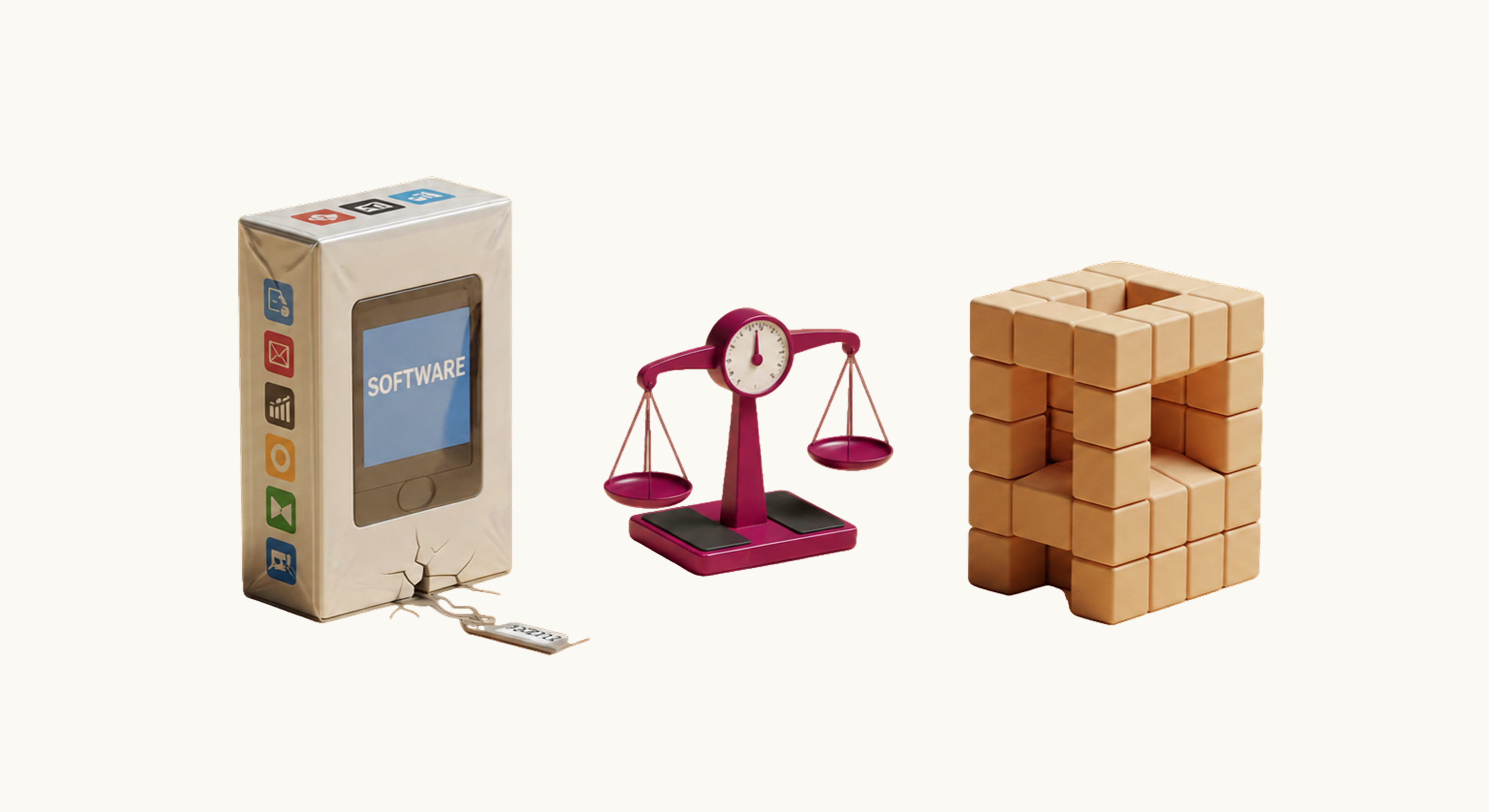
Every African enterprise will always face the Custom software vs. Off-the-shelf software conundrum. There is always the question of whether to build or buy. The answer to this question holds significant bearings on a company's success. Buildings usually entail months of development time and a strong budget. Buying often means making a ton of compromises, such as features you don't need, pricing in dollars, and a product that wasn't designed with your market in mind. In this guide, we’ll cover when custom software gives you an edge in Africa, and when it is just an expensive mistake.
Why Off-the-Shelf Software Often Fails African Businesses
Most SaaS products are designed around the U.S or European market. They assume stable internet, credit card payments, clean address formats, and regulatory environments that look nothing like Lagos, Nairobi, or Accra. This results in businesses operating around software that was never built for them.
Let us consider payment structure. Nigeria's licensing requirements for payment service providers are long, complex, and often involve formal procedures that cause significant approval delays. A payment flow built for a U.S. business assumes cards. In reality, many African users rely on transfers, USSD, mobile money, or agent networks. This leaves lots of African businesses having to improvise.
In 2026, regulators like the Central Bank of Nigeria and the South African Reserve Bank are firming up interoperability frameworks, and the differentiator for businesses is now utility, placing services directly into the platforms customers already use. Generic software isn't built to tap into that; custom software is.
When Custom Software Becomes a Competitive Advantage
1. Your Business Model Doesn't Fit the Template
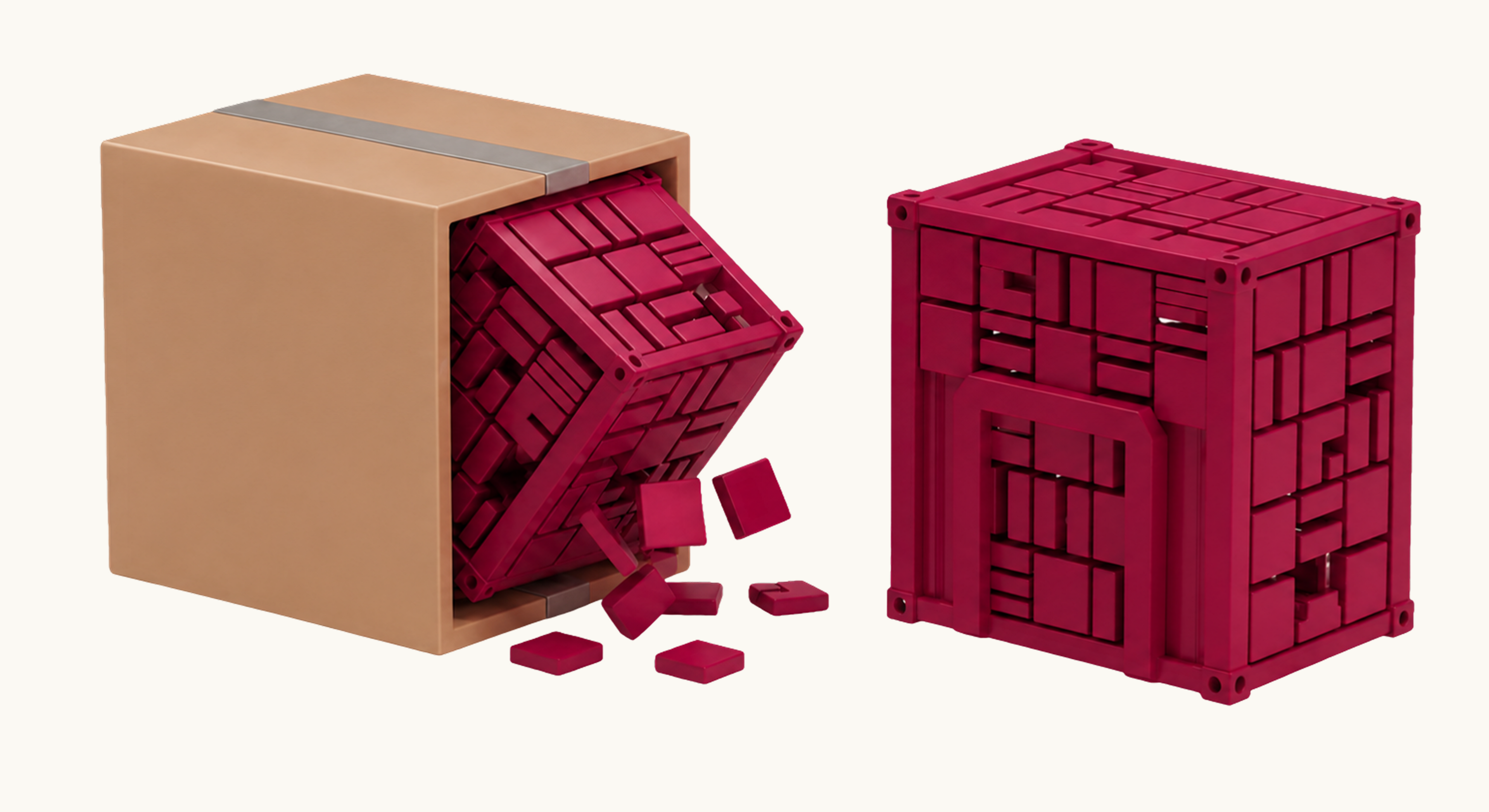
The most successful African tech companies didn't achieve success by copying a Western playbook. They dominated by solving problems that matched African realities. Moniepoint processes $22 billion monthly, and this scale is due to their solution of problems unique to Africans. For example, their POS machine, built specifically for Nigeria's informal sector, has become the backbone of millions of small businesses. In the same vein, M-Pesa serves over 40 million users and dominates Kenya's mobile payments market because it was built for the exact constraints and behaviors of its users, not borrowed from elsewhere.
2. You're Operating in a Regulated or Complex Industry
Industries like Finance, healthcare, logistics, and real estate often carry compliance requirements that differ between countries. Cloud services tailored to specific industries are gaining traction, with developers creating customized solutions for heavily regulated sectors to ensure compliance and operational efficiency.
To put this in context, a hospital management system that works in South Africa won't automatically comply with Nigeria's health data regulations. A proptech platform built for Congolese real estate won't account for how land documentation works in West Africa. In cases like this, custom software is often the only legal option.
3. You're Ready to Scale Beyond Early Growth
Off-the-shelf tools are great to use at the beginning, as they help you move fast and validate ideas. However, growth often exposes their limits. What worked for 500 users starts breaking at 50,000. Integrations get messy. This is why big companies often rely on custom software to develop complex systems, connect internal tools, and meet strict security or compliance standards as they scale.
4. Integration is slowing you down
Disconnected systems introduce operational drag: lengthening approval cycles, obscuring performance insights, and increasing exposure to compliance and operational risk. If you're running three or four standalone tools that don't integrate well with each other, you'd end up losing efficiency just as much as you lose insight, and possibly revenue.
This is one major advantage of using custom software. It fixes the integration problem by design. Instead of building workarounds between tools that don’t integrate well, everything is built to work together from the start.
When Custom Software Is Not Worth It
1. You're pre-product-market fit
Most startups will go through several iterations before finding product market fit. Investing early in custom solutions becomes a gamble if the business direction changes. Off-the-shelf tools provide that flexibility without any major redevelopment requirement.
2. You need speed more than control
With off-the-shelf software, you can begin implementation within days, which is impossible with custom software. If the focus of your team is to move fast, maybe to close a funding round, test an idea, or launch before a competitor, ready-made tools are the smarter choice.
3. Software is not your differentiator
Not every business is tech inclined. If your advantage comes from your service, your distribution, or your network, then software is just a support. Software not being a primary differentiating factor of your value proposition makes off-the-shelf software a preferable option, as it decreases the maintenance burdens.
4. Your budget cannot support it
Custom software is an investment. You are not just building but maintaining and improving alongside. If your runway is tight, it makes more sense to validate existing tools first and invest in custom builds when you have the resources to do it right.
The African Developer Ecosystem Is Ready
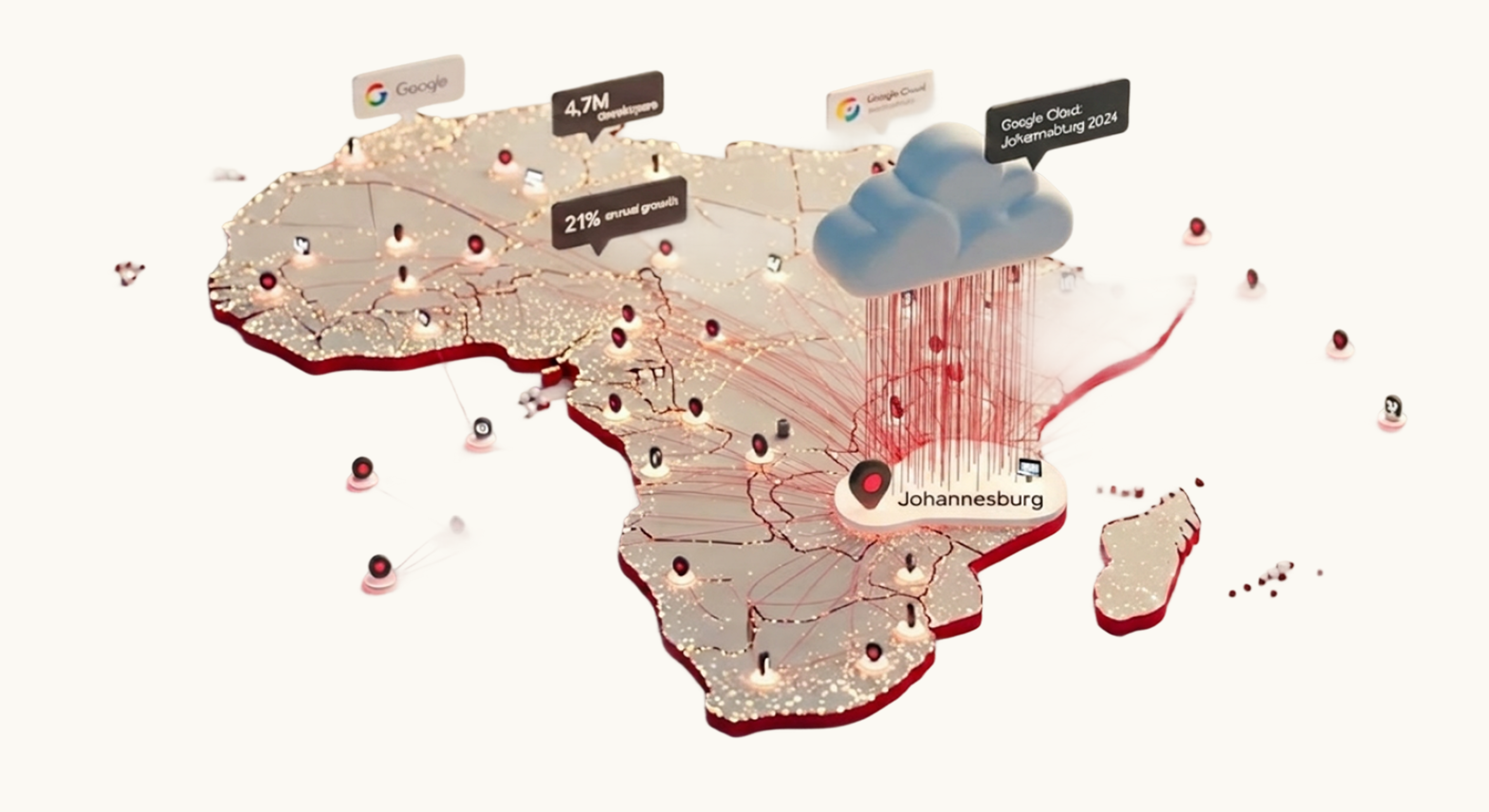
One thing that used to hold businesses back was access to talent and infrastructure, but that is fast changing. Africa's developer community now stands at 4.7 million and has been expanding at 21% a year between 2019 and 2024, outpacing the growth rate of every other continent. The talent base is not only growing in numbers, but it's also building things that matter, from AI-powered agritech platforms to cross-border payment infrastructure.
Google Cloud launched its first African cloud region in Johannesburg in January 2024, providing businesses with high-performance, low-latency cloud services. Such a development is expected to be a catalyst for Africa's tech ecosystem. Cloud providers, better connectivity, and stronger startup ecosystems are making it easier to build and scale within Africa.
So, Should You Build or Buy?
The companies that have reshaped African tech, from Flutterwave to Moniepoint to M-Pesa, all built custom. It is not because building is always better, but because their specific problems couldn't be solved any other way. Before choosing to build or buy, ask yourself whether what you're building is solving a problem that no existing product can handle. If yes, build well for your market. If not, there's no shame in buying something that already works.
TAGS:


Build what matters, with Gozade
Let's Talk
Gozade
Address 1
3rd Floor, 86-90 Paul Street, London, England, United Kingdom, EC2A 4NE
Address 2
SUITE E141, IKOTA SHOPPING COMPLEX, VGC AJAH LAGOS, NIGERIA
+2349032770671, +44 7873272932
Gozade builds smart digital solutions that help businesses grow and scale with confidence.
© 2026 Gozade. All rights reserved.