
Insights
Articles
9 March 2026
9 min read
Is AI Replacing Product Designers? The Fate of Design Jobs in 2026
Praise Ohans
Author
Is AI Replacing Product Designers?
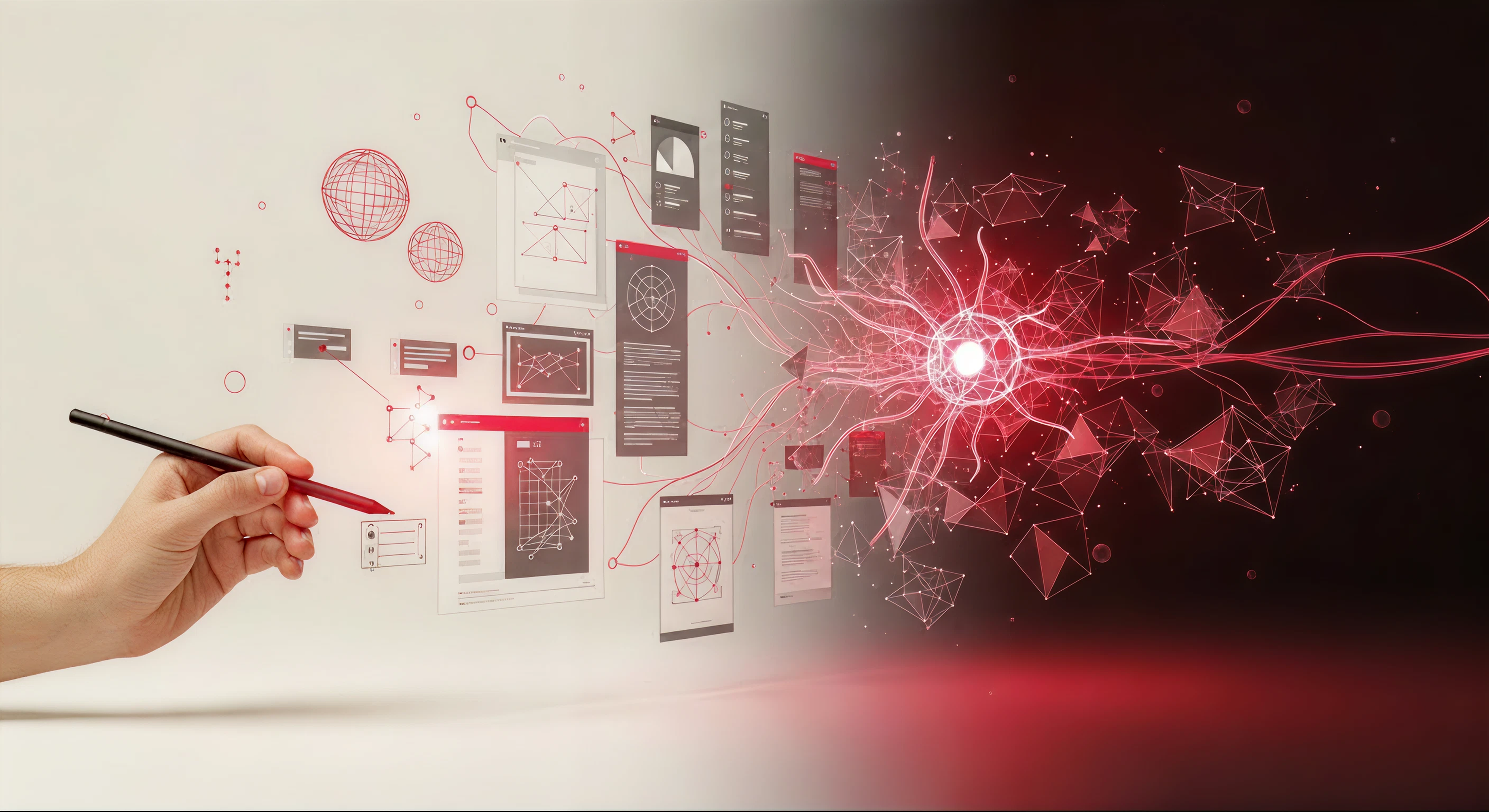
Almost every product designer has googled 'Will AI replace designers?' at least once. Type this into Google and you’ll find yourself caught between two extremes. One side says design jobs are about to evaporate, especially junior roles. The other side offers some sort of soft reassurance; with the argument that AI is just a tool to help designers become more efficient in their work. Neither answer is satisfying. In fact, neither reflects what is actually happening in AI and design jobs in 2026. AI is not replacing product designers. However, it is replacing a certain type of designer which we will discuss in this article.
Will AI Replace Designers? What the Data Says
Now, let’s move past personal opinions and answer based on fact. Because if you want to answer the “Will AI replace designers in 2026?” trending question, you need verifiable data to back up your claim. According to the 2025 AI Jobs Report from Autodesk, design has overtaken technical expertise as the most in-demand skill in AI-related job postings. And yes, this is ahead of in-demand skills like programming, cloud infrastructure, and data science combined. What makes this even more telling is the fact that over 3 million job listings were analyzed to come up with this report. This totally trashes the whole “AI is eliminating designers” narrative. If AI were truly replacing product designers, demand would be falling. Instead, design is becoming central to AI product development. Companies building AI products need designers more than ever to translate technical capability into human-centered experiences.
What AI Is Already Replacing
If one is asking “Will AI replace designers in 2026?” and someone tells them that nothing is changing, then it is a lie. We have come to the part of this blog where we need to tell ourselves the hard truth. Some parts of product design are already being automated.
Some aspects of product design are already being replaced by AI. For example, AI is now being used for rapid asset production, generating safe on-trend UI from common libraries, and generating "good enough" landing pages for basic projects.
Specifically, AI tools are now automating:
- Wireframe generation: With Figma Make, you can now generate multi-screen wireframes from a single prompt, pulling from your actual design system
- Asset production: AI tools can generate usable assets like backgrounds, icons, and marketing visuals.
- Generic UI layouts: AI can create dashboards and templates that follow best practices. It is very good at creating common UI patterns.
In all of these, AI is exceptionally good at generating safe, best-practice UI. However, it still cannot generate high-level product thinking. AI is not replacing designers. What it is doing is absorbing the tedious parts of a designers’ workflow.
Now, you no longer have to start from scratch; it’s like having a rough draft to build from. Now your job becomes refinement instead of starting from scratch. AI can draft a wireframe, but it cannot decide whether a feature should exist or not. That is where the human element comes into play. Now, this aspect is the most integral part of the design process.
What Aspect of Design AI Cannot Replace
Now the conversation gets a little interesting. According to UX Collective's analysis, the one thing AI genuinely cannot replicate is “taste.” Generating an aesthetically pleasing design in seconds is AI’s strength. However, it lacks human judgement. Design is human-centric; it is more about creating an interface that is intuitive for users than it is about creating an aesthetically pleasing one. For designers, taste is the ultimate differentiator, and this is built from lived experience: watching real users struggle through onboarding, shipping a pricing page that flops and learning exactly why, hearing "make it pop" a hundred times and knowing what it actually means for each client. In all, AI has no memory of stakeholder battles or intuition built from failed launches. Taste is built through experiences, something AI doesn’t have.
AI follows best practices. It doesn't follow your client's brand voice, or your user's emotional state. Every designer can relate to finishing a project and still have their instinct tell them something like "this looks beautiful, but something feels wrong." Well, that’s the human touch, something AI can never relate to.
D2M's research illustrates this perfectly. When AI was tasked with designing a strap-tightening system for a harness, its output was visually compelling but completely non-functional. The human team approached the problem by understanding the functional requirements and user experience. They ended up designing something that worked and secured a patent. That is where human touch and discernment come into play, and in the future of product design, human experience is non-negotiable.
Other aspects AI still can't do:
- Empathy: understanding the emotional weight behind a user's frustration
- Stakeholder communication: convincing a skeptical VP why a layout decision is right
- Ethical judgment: weighing privacy, accessibility, and social impact in real context
- Originality: AI recombines what already exists; it doesn't invent what's never been seen
Best AI Tools for Product Designers in 2026
We have established that AI should be an integral part of your workflow, so you don’t always have to begin every project from a blank canvas. Knowing which AI tools for product designers to use will help improve your workflow significantly:
For Concept & Ideation
- Midjourney: This remains the go-to for visual exploration and mood boarding. Useful for exploring styles, themes, and visual directions before moving into detailed interface work. Rapid exploration of themes before you even ever get to open Figma.
- Adobe Firefly: This is the safer option for enterprise environment. It is trained on licensed content, so ideal for brand assets without IP risk.
For UI Generation & Prototyping
- Figma AI / Figma Make: Already out of beta and vital for early-stage design work. The prompt-to-prototype path is especially useful as it pulls from your design system. This means AI-generated UI actually uses your components instead of inventing random ones.
- Galileo AI: It is useful for text-to-UI generation. Can also transform rough sketches into a fully editable hi-fi design for web or mobile. All generated designs can be easily exported to Figma.
- Uizard: Can easily turn whiteboard sketches into hi-fi ui designs with clickable prototypes in minutes.
- v0 by Vercel: Bridges the design-to-code gap by generating clean React/Tailwind components from prompts. Instead of developers needing to write code for each component, v0 generates react and tailwind CSS code using natural language prompts.
For Research & Synthesis
- Miro Assist: It clusters sticky notes, summarizes user interviews, and condenses research into actionable insights.
- Maze: Useful for AI-powered usability research and test analysis. Can help in user research to quickly identify patterns, point out potential biases, and to gain a deeper understanding of user behaviour.
The Future of Product Design Career in 2026
Humbl Design's 2026 report says that AI will not replace designers. However, it will definitely replace template designers. These are designers who are only concerned about creating frames on Figma and never talk or research on the behaviour of users of their product. There are designers who don’t care about user research; all they brag about is their ability to make a design look good. Designers like these are no different from AI as they lack the emotional touch that gives humans an edge over AI.
This is why your design thinking must change in order for you to remain relevant in 2026 and beyond. To be specific, here are the types of designers most at risk of being replaced:
- Designers that treat design as a mere tool skill, and not a thinking skill
- Designers that do not care about identifying and defining a problem
- Designers who have no relationship/interaction with users of their products
These designers are all at risk of getting replaced by AI. Beyond being a Figma skill, product design is all about identifying pain points and solving them for users. That is why to remain relevant, you must reason beyond adding frames on a blank canvas and start thinking about the users of your product. You must be strong in problem framing. Moving beyond asking how something should look to why it should exist.
AI is not your enemy. Use it to explore multiple directions in minutes, then select and refine with intention, and then apply judgment after generation. We are in the AI era. Are you adapting?
Final Verdict
AI will not replace product designers, but the job description is fast changing. If your value lies entirely in your ability to push pixels, export assets, and build wireframes, that value is at real risk. But if your value lives in your ability to think, to empathize, to make strategic decisions and communicate them in your designs. You're not just safe; you're even more valuable than you were two years ago.
As a designer in 2026, you don’t need to avoid using AI. You just need to know where to use it and exactly where to say: "No, this part needs human judgement.”
Frequently Asked Questions
1. Will AI overtake UI/UX designers?
Not entirely, but it will overtake the part of the job that is purely about execution. AI will not replace designers who think strategically, conduct real user research, and influence product decisions. But it will replace designers whose only value is producing screens without proper research.
2. Is UI/UX design still worth it in 2026?
Yes, and that’s if you go in for the right reasons. The demand for designers who genuinely solve human problems remains strong, especially as more AI products get shipped into the world and need people to make them actually usable. The job has shifted slightly. Hiring managers now want to see AI tool fluency alongside traditional skills. But if you are curious about people, systems, and how the two interact, the career is more interesting now than it has ever been.
3. How long does it take to become a UI/UX designer in 2026?
There is no exact timeframe, but it is definitely longer than bootcamps advertise. With dedicated, structured learning, six to twelve months is a realistic timeline to become entry-level job ready. What has changed in 2026 is the definition of "ready." Portfolios now need to show real problem-solving and evidence that you can work with AI tools, not just Figma alone.
4. What skills do product designers need to stay relevant in 2026?
Five skills every product designer must have in 2026 are:
- Strategic thinking: understand the business problem, not just the interface brief
- Prompt literacy: knowing how to direct AI tools with precision for a good output
- User research: correctly identifying which problem is worth solving remains irreplaceable
- Stakeholder communication: defending design decisions clearly to people who do not share your instinct
- Basic vibe coding: enough to prototype in real environments, not just Figma mocks
5. Will AI replace graphic and visual designers too?
Partially. I mean it already has, especially junior asset production work. But taste, which is the judgment of what is right for a specific brand, audience, and cultural moment, is something AI cannot replicate. It is built through years of experience, not trained on a dataset. So, AI cannot fully replace graphics design as it lacks this integral part.
TAGS:
Build what matters, with Gozade
Let's Talk
Gozade
Address 1
3rd Floor, 86-90 Paul Street, London, England, United Kingdom, EC2A 4NE
Address 2
SUITE E141, IKOTA SHOPPING COMPLEX, VGC AJAH LAGOS, NIGERIA
+2349032770671, +44 7873272932
Gozade builds smart digital solutions that help businesses grow and scale with confidence.
© 2026 Gozade. All rights reserved.